Modular Building Codes by Market: US, UK, EU and Australia
GUIDE SERIES · PART 03 OF 48
Modular Building Codes by Market: US, UK, EU and Australia
What your local authority will check, and what to send TOPK before we build.
There is no single global building code. Each country, and often each state, region or council, sets its own rules for structure, fire safety, energy performance, electrical and plumbing work. A modular building has to meet the rules where it will stand, not where it was made. This guide outlines the framework in the United States, the United Kingdom, the European Union and Australia, and explains what TOPK needs from you to build a module that your local authority can approve.
What TOPK builds, and who designs to local code
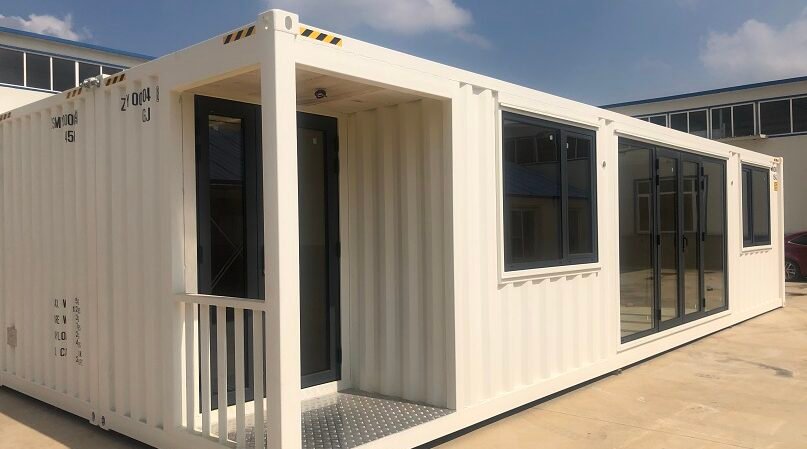
TOPK builds the module: the steel structure, insulation, and the wall, floor and roof system, to the drawings you approve. Your local architect or engineer designs the building to your local code, and your local authority approves it. TOPK builds to those approved drawings.
This is the same split that applies to plumbing, wiring, windows, doors and appliances. These are fitted in your own country with products that carry your national certification, so they meet your local standards from the start.
Custom Steel Modular Buildings
What to send us before we build
Your local engineer or architect will know these figures for your site. The sooner we have them, the sooner we can confirm the structure and insulation.
| Design input | Why it matters |
|---|---|
| Snow load | Sets the roof structure |
| Wind load and wind region | Sets the frame, connections and anchoring |
| Seismic zone | Sets the frame and the connections to the foundation |
| Climate zone and required insulation level | Sets the thickness and type of insulation and the wall build-up |
| Fire requirements | Affect cladding, linings and separation between units |
| Bushfire rating (Australia) | Affects cladding, glazing and external materials |
| Accessibility requirements | Affect door widths, thresholds and layout |
| Intended use and occupancy | Residential, office, commercial kitchen and guest accommodation are treated differently |
Market by market
United States
- Framework: Building rules come from model codes, mainly the International Building Code and the International Residential Code. States and local authorities adopt them with their own amendments, so the rules differ from place to place.
- Approval: The state or local building department reviews and approves the plans. Many jurisdictions expect the drawings to be stamped by a locally licensed engineer or architect, and many have a separate program for factory-built buildings.
- Electrical and plumbing: Electrical work follows the National Electrical Code and uses listed products, such as UL-listed components. Plumbing follows the local plumbing code.
- Settle early: Which code edition and amendments apply in your county, and whether your state has a specific process for factory-built or off-site construction.
United Kingdom
- Framework: In England, the Building Regulations and their Approved Documents cover structure, fire safety, ventilation, energy and access, among other topics. Scotland, Wales and Northern Ireland have their own versions. Structural design generally uses the Eurocodes with UK National Annexes.
- Approval: Planning permission is a separate matter from building regulations approval, and a building may need one, both or neither, depending on its use, size and position. Building control is carried out by the local authority or a registered private body.
- Electrical: Wiring follows BS 7671, and products carry UKCA or CE marking as the current rules require.
- Settle early: Whether the building needs planning permission, and whether a warranty provider or mortgage lender will ask for additional evidence. These requirements are common for homes.
European Union
- Framework: There is no single EU building code. Building rules are national or regional. The Eurocodes provide a common basis for structural design, with national annexes that set local values. Construction products are covered by EU product rules, which are being revised, so check the version that applies to your project.
- Approval: A local or regional building authority issues the permit. In Germany, for example, each federal state has its own building regulations and requires a building application, with structural calculations checked by a qualified engineer.
- Electrical: Wiring follows national rules, which are based on the international IEC 60364 series. Electrical products must meet EU product requirements.
- Settle early: Which country and region the building is in, since the rules differ significantly between them, and the energy performance requirements for new buildings there.
Australia
- Framework: The National Construction Code covers buildings. Volume One applies mainly to commercial and multi-residential buildings, Volume Two to houses and small outbuildings, and Volume Three to plumbing. It references Australian Standards, including those for wind loads and for construction in bushfire-prone areas.
- Approval: States and territories administer building approval, usually through a registered building surveyor or certifier. Products can carry certification such as CodeMark where a certified product is required.
- Electrical and plumbing: Wiring follows AS/NZS 3000, and plumbing follows AS/NZS 3500 with WaterMark-certified products.
- Settle early: The wind region, the bushfire attack level for the site, the climate zone, and the biosecurity inspection that applies to imported containers and timber on arrival.
Residential and Commercial Modular Building Options
Comparison at a glance
| Market | Main building framework | Electrical standard | Approval route |
|---|---|---|---|
| United States | International Building Code and International Residential Code, adopted and amended locally | National Electrical Code, listed products | State or local building department |
| United Kingdom | Building Regulations (England), with separate rules in Scotland, Wales and Northern Ireland | BS 7671 | Local authority or registered private building control body |
| European Union | National and regional building codes, Eurocodes with national annexes | National rules based on IEC 60364 | Local or regional building authority |
| Australia | National Construction Code and Australian Standards | AS/NZS 3000 | State or territory approval through a registered surveyor or certifier |
How the process works with TOPK
- Your local engineer or architect prepares the design to your local code, using the design inputs above.
- You send the drawings to TOPK, or a sketch if you do not have drawings yet. We prepare production drawings from it.
- TOPK confirms the structure and insulation against the loads and requirements on the drawings, and quotes the module.
- Your authority approves the plans, with stamping by your local engineer if required.
- TOPK builds to the approved drawings. Production starts after the final drawings are approved and payment in full is received by T/T.
- You complete the fit-out locally with certified products, and the building goes through your inspection.

Classification society certificate and building approval
TOPK’s container-size modules are certified by a classification society, which allows them to be transported as containers. That certificate relates to shipping. It does not replace the building approval that your local authority requires, so the planning and permit steps above still apply to every building.
FAQ
Which building code does a TOPK module follow?
The code where the building will stand. Your local engineer or architect designs to it, and TOPK builds the module to the drawings approved by your authority.
Do I need a local engineer or architect?
In most places, yes. Many authorities require drawings stamped by a locally licensed professional. TOPK can prepare production drawings from your design or sketch, and your local professional prepares the documents your authority requires.
Can TOPK change the design after my authority has commented on it?
Yes, if the changes are agreed before production starts. Each building is custom made, so changes after the final drawings are approved affect the schedule and cost.
Does the classification society certificate count as building approval?
No. It relates to transport. Building approval comes from your local authority.
Which market is the easiest to get approved in?
It depends on the site, the use and the local authority more than on the country. Check with your local authority early, before you finalise the design.