
Container House Shipping: Container Freight, Flat Rack and Breakbulk Explained
GUIDE SERIES · PART 02 OF 48
Container House Shipping: Container Freight, Flat Rack and Breakbulk Explained
How module size decides freight cost, and what FOB, CIF and DAP mean for your order.
TOPK makes two kinds of building module, and they ship in different ways. Modules built to the exact size of a standard shipping container carry a CSC plate and a classification society certificate, and travel as ordinary container freight. Non-standard modules are best sized to fit inside a container. A module too large for that can go by flat-rack container or by breakbulk vessel, depending on the actual situation, and the freight cost is higher. Modules that match standard container sizes remain the most economical to ship. This guide explains both, and what FOB, CIF and DAP mean for your order.

Two Kinds of TOPK Module
1. Non-standard Size Modules
These are built to your drawings and are not tied to a container’s outside dimensions. We recommend sizing each module so that it can be loaded inside a 20 ft container, a 40 ft standard container or a 40 ft high-cube container.
Loaded this way, it ships at container rates. A module too large for a container can go by flat-rack container or by breakbulk vessel. Which one suits depends on the actual situation, such as the size and weight of the module, the route and the ports. Non-standard modules do not carry a CSC plate.
2. Container-size Modules
These match the dimensions of a standard shipping container exactly, and they look like containers. They carry a CSC plate and are certified by a classification society, so they can be transported the way a container is transported.
| ature | Non-standard Size Module | Container-size Module |
|---|---|---|
| Dimensions | Built to your drawings | Same as a standard shipping container |
| Appearance | Designed to your brief | Similar to a shipping container |
| Classification society certification | Not applicable | Yes |
| How it ships | Loaded inside a container if it fits; breakbulk if it does not | As a container |
| Freight cost | Container rate if it fits inside; higher if breakbulk | Container rate |
Which one suits you depends on your design. If your layout needs freedom of shape, a non-standard module sized to fit inside a container keeps most of that freedom and still ships economically.
20ft Container Home Dimensions
If you want the lowest and most predictable shipping cost, and a container look suits the project, a container-size module is the most direct route.
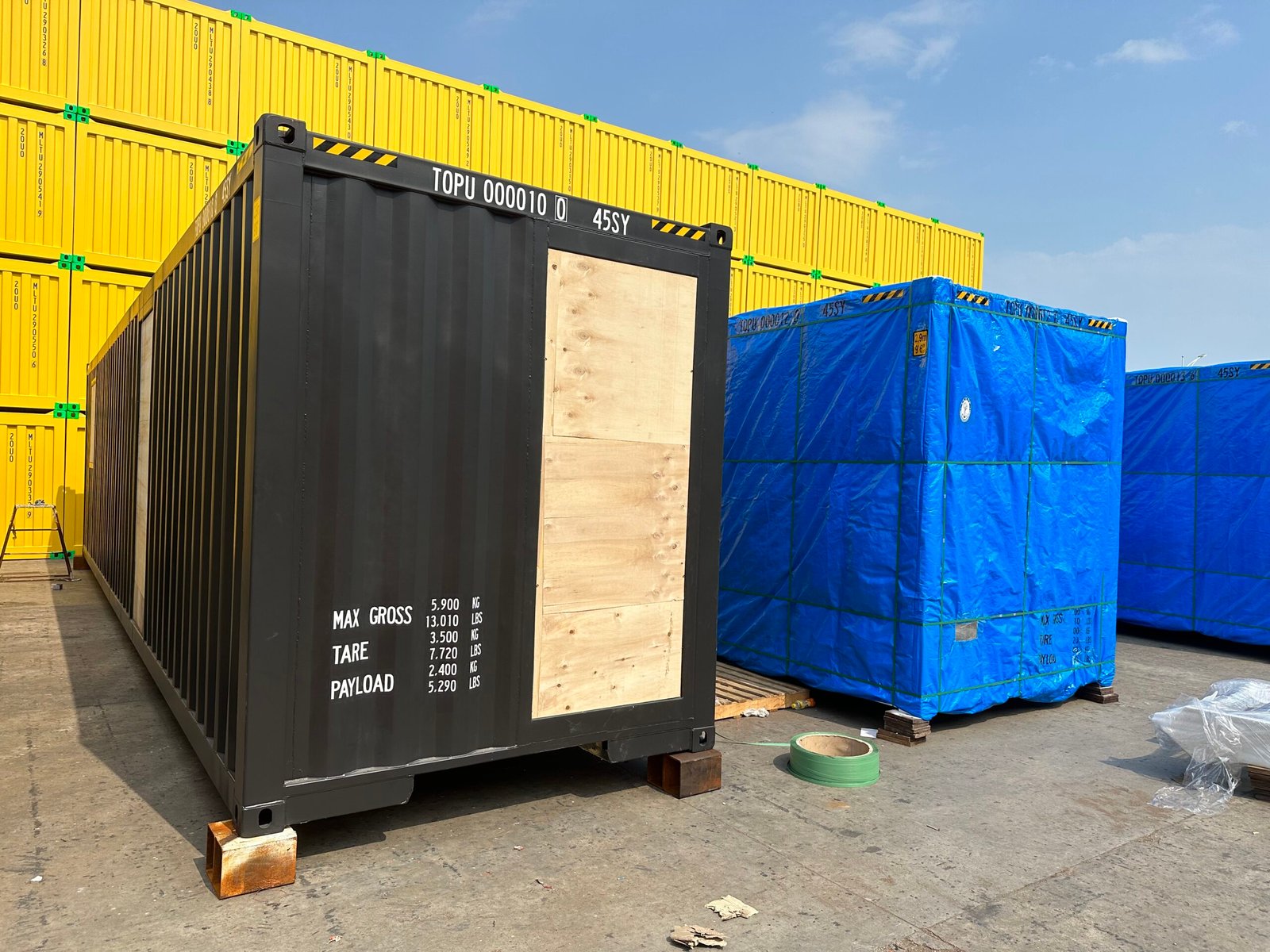
Container Freight, Flat Rack and Breakbulk
| Method | What It Is Used For | What It Means for You |
|---|---|---|
| Container shipping | Container-size modules, and non-standard modules loaded inside a container | Regular sailings and the lowest freight cost for most orders |
| Flat-rack container | Non-standard modules too large to fit inside a container | Special equipment, and a higher cost than container shipping |
| Breakbulk (conventional vessel) | Very large or heavy modules | Fewer sailings, special handling at both ports and a higher cost |
For a module too large for a container, the method is chosen according to the actual situation, such as its size, weight, the route and the ports. Modules that match standard container sizes remain the most economical and give the best value for money.
If your design is larger than a container, tell us early. We can often divide it into modules that each fit, which brings the shipping back to container rates. If it cannot be divided, we will recommend a method and explain the cost before you decide.
Shipping Documents
Every shipment is accompanied by a commercial invoice, a packing list, a bill of lading and a certificate of origin. Container-size modules also carry a CSC plate on the module and come with their classification society certificate. Your customs broker uses these documents for import clearance.
Preparing for Arrival
A few things are worth settling before the modules reach your port:
- Confirm the port of discharge with TOPK when you place the order.
- Appoint a customs broker and ask them to confirm the tariff code.
- Check the road route from the port to your site, including width, height and weight limits.
- Book the truck and crane for the delivery date, and make sure the foundations are ready.
40ft Container Home Dimensions

FAQ
Which Module Type Should I Choose?
Tell us your use, layout and destination, and we will recommend one. A container-size module gives the most predictable shipping. A non-standard module sized to fit inside a container gives more design freedom at a similar freight cost.
Which Container Size Should I Design For?
It depends on your layout. The 20 ft container suits small units, the 40 ft standard container suits long single modules, and the 40 ft high-cube suits modules that need extra height. We will recommend the one that fits your design.
What Happens If My Design Is Larger Than a Container?
It can ship by flat-rack container or by breakbulk vessel, depending on the actual situation, and the freight cost is higher. We can often divide the design into modules that each fit inside a container. If a single oversized module is essential, we will explain the method and cost before you decide.
Are Container-size Modules Really Certified?
Yes. TOPK container-size modules carry a CSC plate and are certified by a classification society. Non-standard size modules do not carry a CSC plate. Contact us to confirm which certificate applies to your order.
Is a Flat-rack Container Cheaper Than Breakbulk?
It depends on the module, the route and the ports. We recommend the method that suits your situation and explain the cost before you decide.
Who Buys the Cargo Insurance?
Under FOB, you do. Under CIF, we arrange basic insurance to your destination port. Under DAP, we arrange transport to the agreed place.