
New Purpose-Built Module vs Converted Used Container: Cost Compared
GUIDE SERIES · PART 28 OF 48
New Purpose-Built Module vs Converted Used Container: Cost Compared
Where the money goes in a used container conversion, how a new factory-built module compares at the same scope, and what to add up before you decide.
A used shipping container looks cheap, and the box itself often costs less than $5,000. A home needs much more than the box: openings cut and reinforced, insulation, interior framing, and engineering to show that it still stands up.
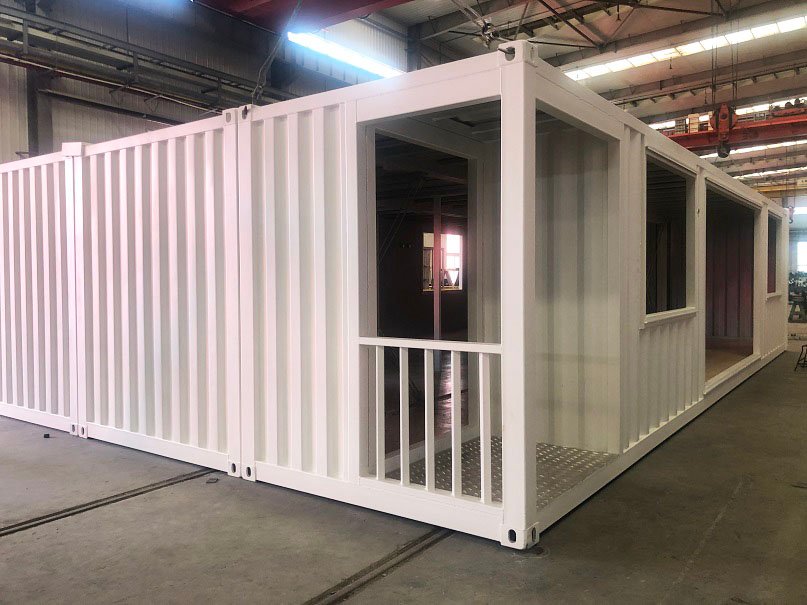
This guide compares one 40 ft high-cube module both ways, at the same scope, with a US used-container conversion on one side and a new TOPK module on the other.
The conversion figures are illustrative estimates. The actual cost for your project depends on your location, your contractor, the condition of the container and your design. Use the worksheet at the end with your own quotes.
The Scope We Compare
| Item | Included in Both |
|---|---|
| Structure | One 40 ft high-cube steel module |
| Insulation | 75 mm — approximately 3 in — polyurethane foam on all six faces |
| Interior | Interior wall and partition framing |
| Openings | Door and window openings made to your drawings |
Not included in either: the windows and doors themselves, foundation, crane, utilities, interior finishes, furniture and permits.
These items must be budgeted for in both routes. Their costs may differ according to the design and installation requirements, so confirm them separately before making a final comparison.
Option 1: Converting a Used Container — US Estimate
| Item | Estimate (USD) | Notes |
|---|---|---|
| Used 40 ft high-cube container, delivered | $3,000–$5,500 | Wind-and-water-tight or cargo-worthy grade; confirm condition and delivery with the supplier |
| Preparation | $1,000–$3,000 | Cleaning, rust treatment, priming, and sealing or testing the floor |
| Door and window openings, with reinforcement | $3,000–$6,000 | Assumes five openings. Include cutting, reinforcement frames, welding and re-coating. |
| 75 mm polyurethane insulation | $6,500–$13,000 | Approximately 1,440 sq ft of inner surface, at roughly $1.50–$3.00 per board foot installed |
| Interior wall and partition framing | $2,500–$6,000 | Materials and labour |
| Engineering review of the cut openings | $500–$2,000 | Structural effects of the openings and reinforcement need checking |
| Estimated total | $16,500–$35,500 | Before windows, doors, foundation, utilities and finishes |
The range is wide because the work is custom, contractors price differently, and a used container can hold surprises such as rust, a damaged floor or an unexpected repair.
These are estimates, and your own quotes decide.
Option 2: A New TOPK Module
| Item | Cost (USD) |
|---|---|
| New TOPK 40 ft high-cube module, FOB Dalian | $15,000 |
| Indicative ocean freight to a main US East Coast port | About $2,500 |
| Subtotal to the port, before additional charges | About $17,500 |
For a main European port, indicative ocean freight is about $2,000, which gives a subtotal of about $17,000.
These freight figures are planning allowances, not current freight quotations. Rates move with the market, so we confirm the figure when we quote.
What the $15,000 Includes
-
- The new steel structure
-
- 75 mm polyurethane insulation sprayed on all six faces
-
- Interior wall and partition framing
-
- Door and window openings made to your requirements
-
- Seams welded on the factory line
What It Does Not Include
-
- Marine insurance
-
- Import duties and customs fees
-
- Port and handling charges
-
- Delivery to your site
-
- Windows, doors, foundation, crane, utilities, interior finishes, furniture and permits.

| Item | Converted Used Container — US Estimate | New TOPK Module — To a US East Coast Port |
|---|---|---|
| The steel box | $3,000–$5,500 | Included |
| Preparation | $1,000–$3,000 | Used-container refurbishment not required |
| Openings, with reinforcement | $3,000–$6,000 | Included |
| 75 mm insulation | $6,500–$13,000 | Included |
| Interior framing | $2,500–$6,000 | Included |
| Engineering review of cutting | $500–$2,000 | Production drawings prepared by TOPK. Local engineering and permit documents may still be required. |
| Ocean freight | Not applicable to the local conversion scenario | About $2,500 |
| Compared subtotal | $16,500–$35,500 | About $17,500 |
| Import duty, customs fees and port charges | Not applicable to the local conversion scenario | Extra |
| Delivery to site | Initial container delivery included in the estimate; any further transport is extra | Extra |
Before import charges and site delivery, the new module’s indicative cost to the port sits near the low end of the conversion estimate.
Purpose-Built 40ft Steel Module Specifications
Where it ends up after duty, handling and delivery depends on your destination. The port subtotal is not the final landed cost.
The Line That Can Decide It: Import Duty
Import duties differ from one country to another, and in some markets they are substantial. They depend on how the building is classified, its origin and the rules in force when it arrives.
Ask a licensed customs broker for the duties and other import charges on your shipment before you compare, and put them in the worksheet below.
We state our FOB price and freight separately so that you can add up the full cost.
What the Numbers Do Not Show
Compare Shell-Only and Interior-Finished Modules
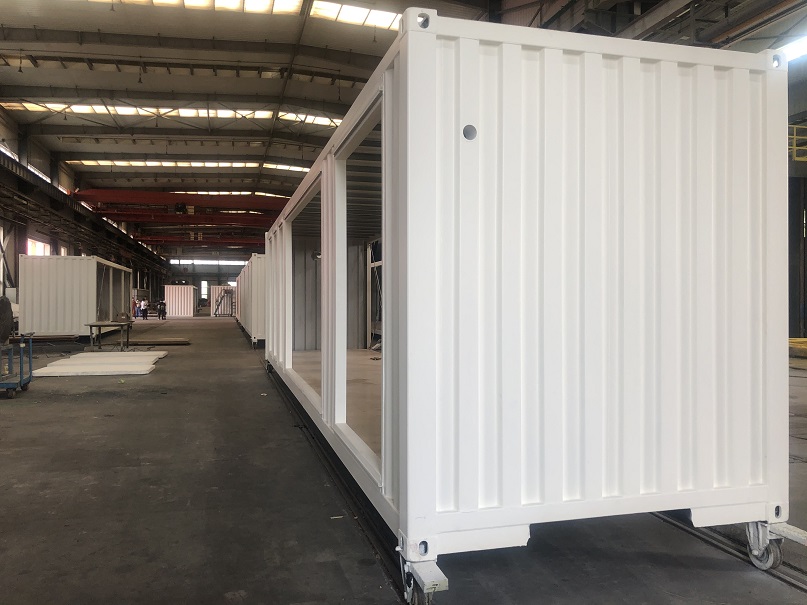
In a new module, the openings are framed in the factory, the insulation is planned across all six faces, and the walls, floor and roof are made together.
A converted container is a shipping box that has been altered, so the changes are retrofitted. Either route still needs structural design appropriate to its intended use and site.
Factory-Welded Seams
TOPK modules are welded on an industrial line. In a used-container conversion, openings are cut into an existing shell, and the surrounding steel needs preparation, reinforcement and protective coating.
Watertightness depends on the design and workmanship in both routes. Part 30 of this series discusses opening and seam details.
A Known Starting Point
A new module has no previous cargo, fumigation or spill history. A used container’s history and floor condition should be checked.
Part 27 of this series explains why that matters.
Fewer Surprises
The scope of a new module is fixed when you order. A conversion’s final cost may change when the work starts and the container turns out to need repairs.
A clear specification and a written list of exclusions help control costs in either route.
A Purpose-Fit Layout
A shipping container was designed to carry cargo. Turning it into a home requires careful planning of openings, usable width, insulation and services.
Part 29 of this series covers the design issues involved.
What the New Module Costs You in Time
A new module needs production time and sea freight before it reaches your port. A local conversion can start once you find a suitable container and an available contractor.
If time matters, ask us for a timetable for your project and compare it with a local builder’s schedule.
Include design, engineering, approvals, transport and site work in both timelines.
When a Used Container May Be the Better Choice
A used container can suit storage, a workshop, a site shed or a temporary structure, depending on its condition and the requirements of the use.
It can also suit an experienced builder doing the work personally on a tight budget. In that case, account for your own time, equipment and specialist work when comparing costs.
For a home that people will live in for years, compare the complete specification and delivered cost of both routes.
Add Up Your Own Numbers
Fill in the quotes you receive. Mark items already included in another line to avoid counting them twice.
| Item | Used Conversion Quote | New Module Quote |
|---|---|---|
| Container or module | ______ | ______ |
| Preparation | ______ | ______ |
| Openings, with reinforcement | ______ | ______ |
| Insulation | ______ | ______ |
| Interior framing | ______ | ______ |
| Engineering and drawings | ______ | ______ |
| Ocean freight | ______ | ______ |
| Marine insurance | ______ | ______ |
| Import duty and customs fees | ______ | ______ |
| Port and handling charges | ______ | ______ |
| Delivery to site | ______ | ______ |
| Contractor’s profit and contingency | ______ | ______ |
| Total | ______ | ______ |
| Time from order to a finished shell | ______ | ______ |
What We Need to Quote
Send us your drawings or a sketch, the destination port and the openings you want.
We will quote the module at FOB Dalian and the freight to your port, and we will tell you what is and is not included.
Every TOPK building is made to order, and payment in full by T/T is received before production begins.
FAQ
Is a new module cheaper than converting a used container?
At the compared scope, the indicative cost of a new TOPK module delivered to the port sits within the US conversion estimate shown above.
The final comparison depends on import charges, delivery, local engineering and the actual conversion quote. Use the worksheet with your own figures.
What Does the $15,000 Include?
The new steel structure, 75 mm polyurethane insulation on all six faces, interior wall and partition framing, and door and window openings made to your requirements, with the seams welded on the factory line.
Are Windows and Doors Included?
No. In this comparison, the windows and doors are supplied and fitted locally in both routes.
What About Europe?
The indicative ocean freight allowance to a main European port is about $2,000, subject to confirmation when we quote.
Run the same worksheet with local conversion quotes and ask a customs broker for the applicable duties and charges.
Why Not Cut and Insulate a Used Container Myself?
You can, if you have the skills, the equipment and the time.
The important details include structural reinforcement, watertight openings, continuous insulation and checking the container’s condition and history. Parts 27, 29 and 30 of this series discuss these issues.
How Long Does a New Module Take?
Allow for production time, sea freight to your port, clearance and onward delivery. Ask us for a timetable for your project.
Do I Pay in Advance?
Yes. Every TOPK building is custom made, so payment in full by T/T is received before production begins.
Request a Quote for a Purpose-Built Module